Tejido Urbano · Case study · Brand Experience
Tejido Urbano
Nobody speaks architecture. Everybody speaks home.
Habitar is a card game and a journal that turn an architect's hardest meeting, the first one, into a conversation where new clients find out what they want without being asked to name it.
01 — The problem
“What do you like?” is a question almost nobody can answer.
Every first meeting at Tejido Urbano started the same way: an architect, a client, and the question. What style are you into? What finishes, what textures, what colours? The answers came back as empty adjectives. Modern, but warm. Minimal, but cosy. Something like that photo I saved once.
It's not that people don't have taste. Ask someone about furniture styles or finishes and they'll freeze; ask them about Sunday morning in their kitchen and they'll talk for an hour.
Photo to come
A first meeting at Tejido Urbano: architect, client, and a table full of references that say everything and nothing
02 — The tools
Don't brief the client. Play with them.
We stopped interviewing and made two pieces under one name: Habitar, Spanish for “to inhabit”. The premise is printed inside both: the point isn't to define a style, it's to understand what makes a place feel like yours.
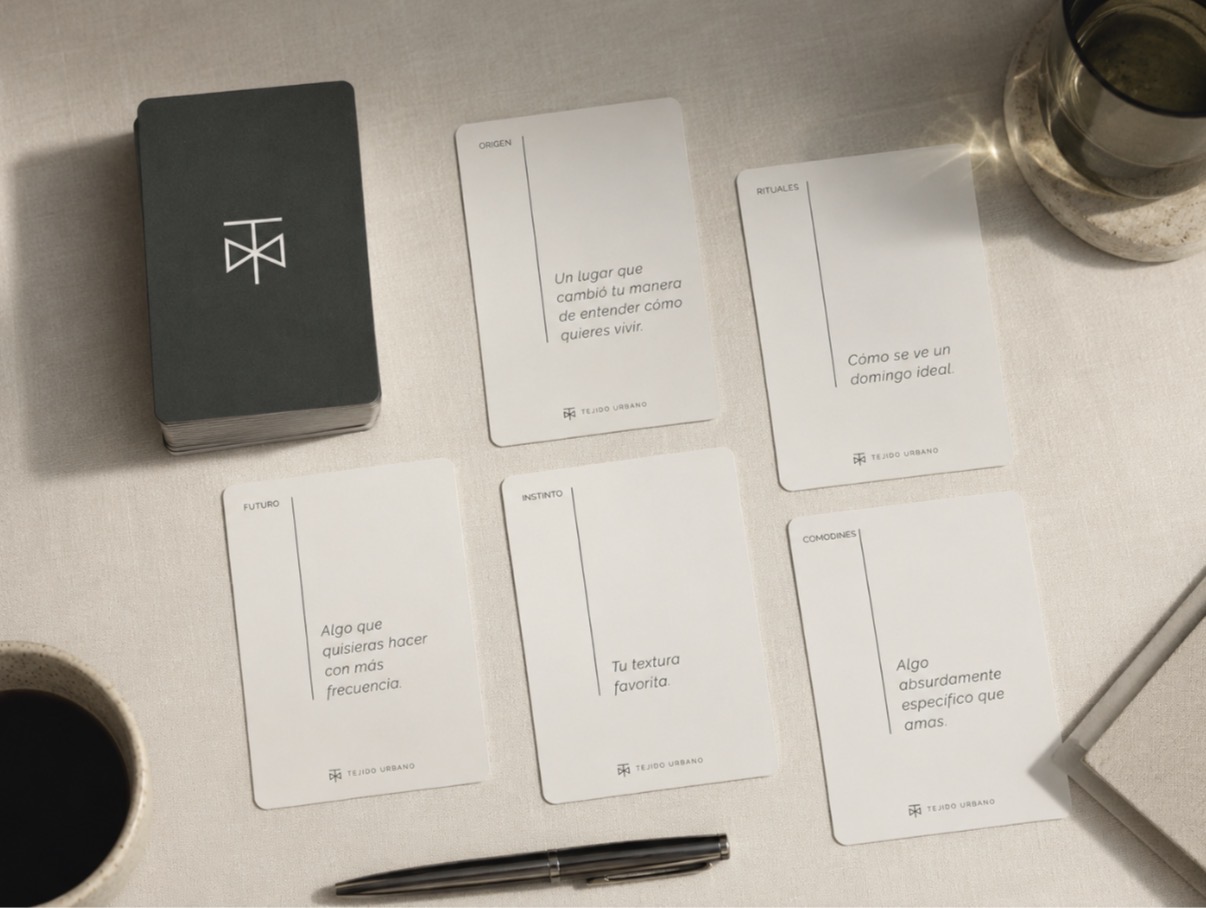
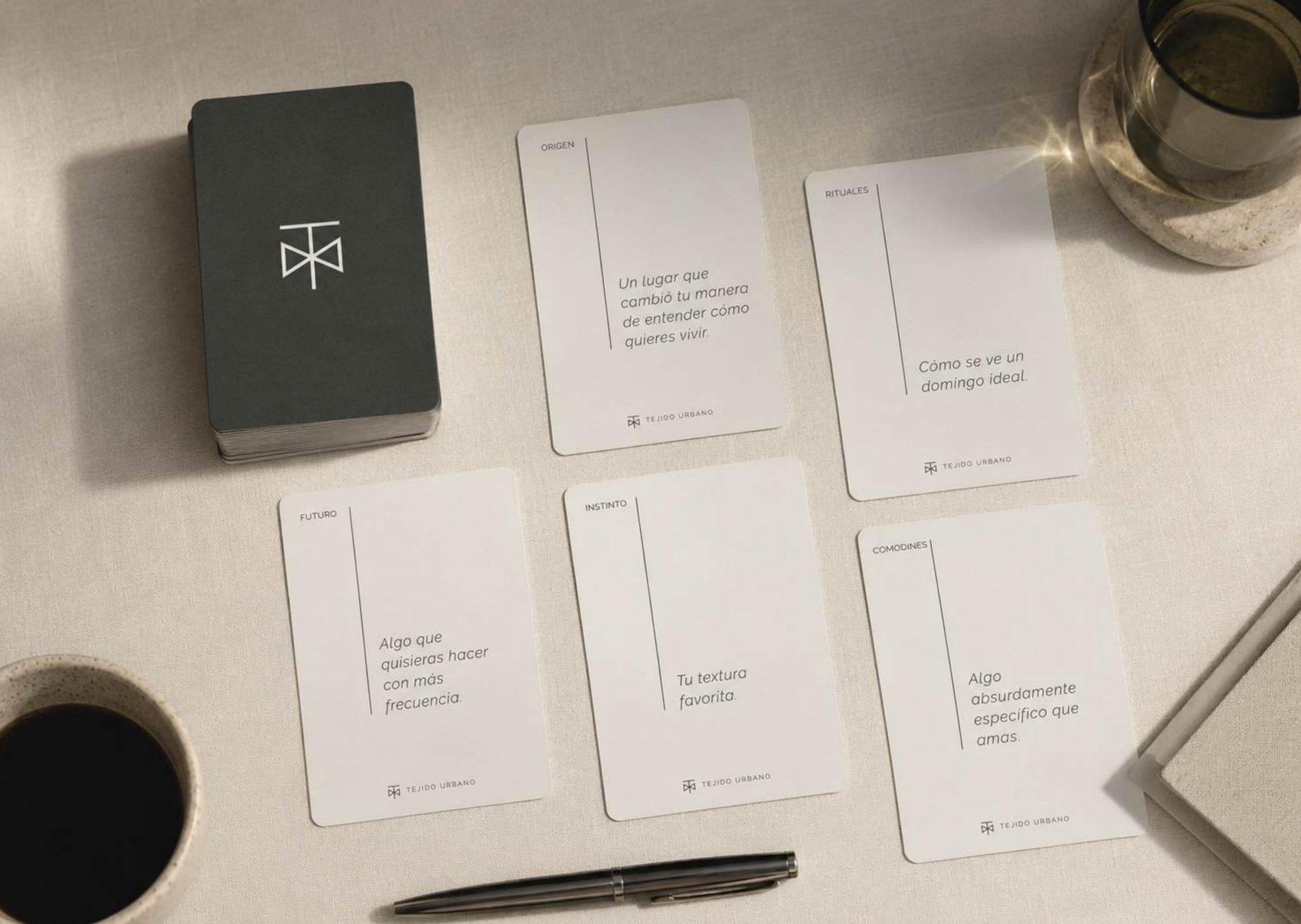
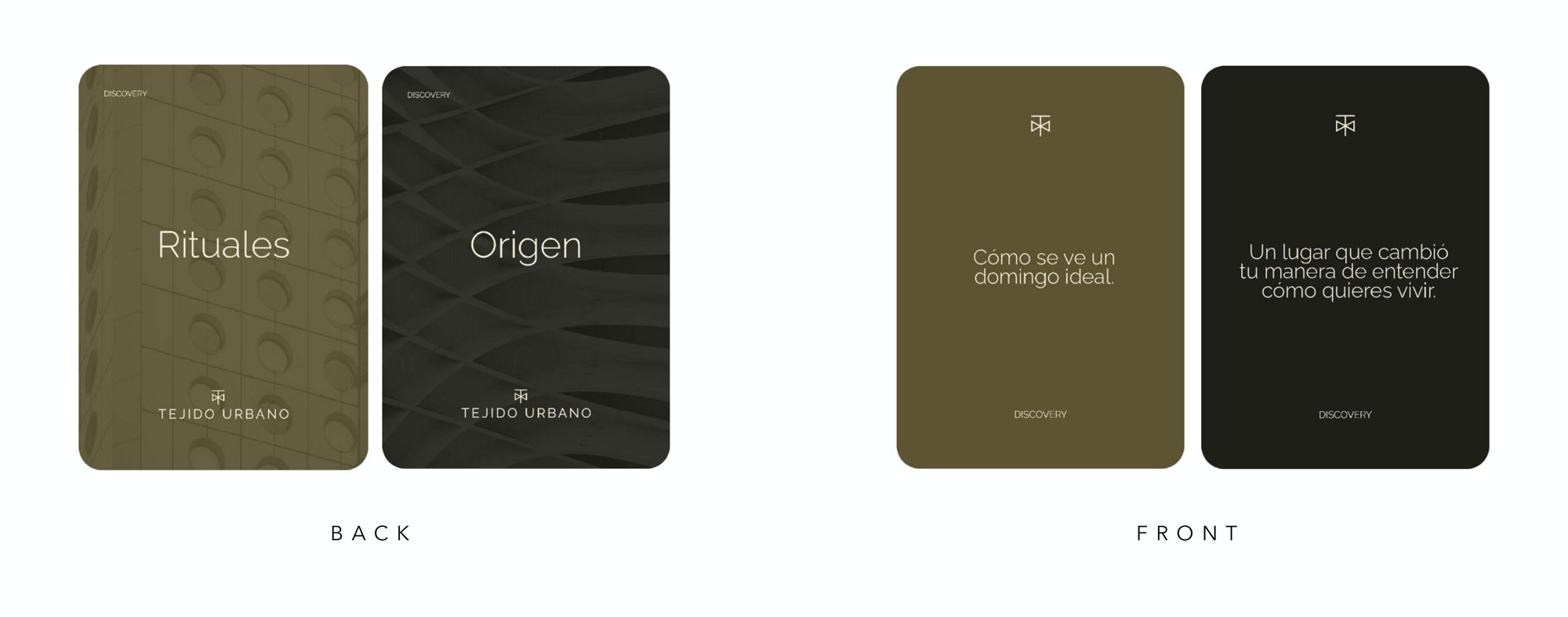
The card game is “a ritual of discovery”, played at the studio with the people you'll live with. Four decks: Origen for memories, Rituales for habits, Futuro for what you want more of, Instinto for quick sensory answers. Plus wildcards that keep it light: your top three films, a guilty pleasure you'd defend to the death. The studio plays too, and listens.
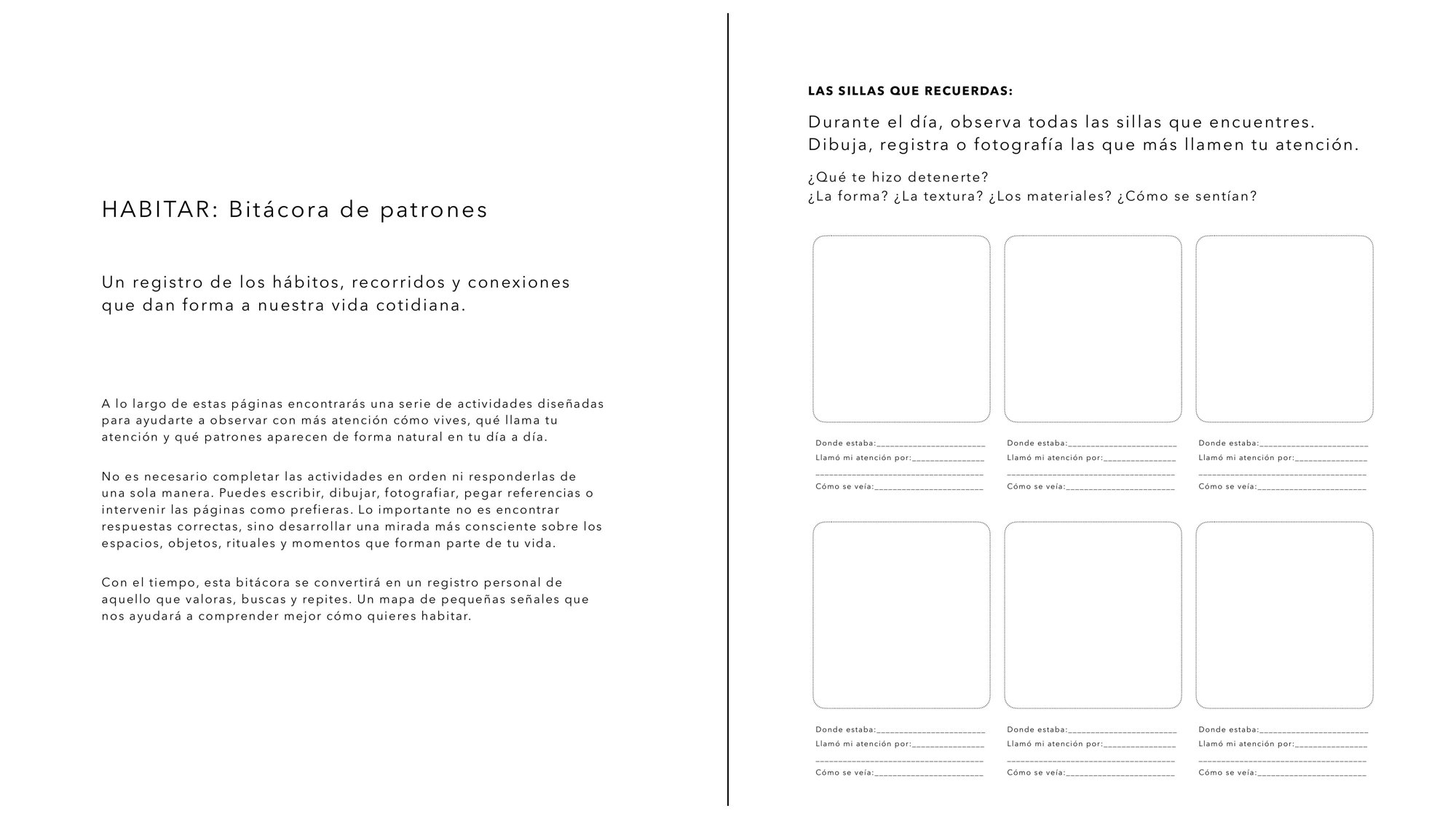
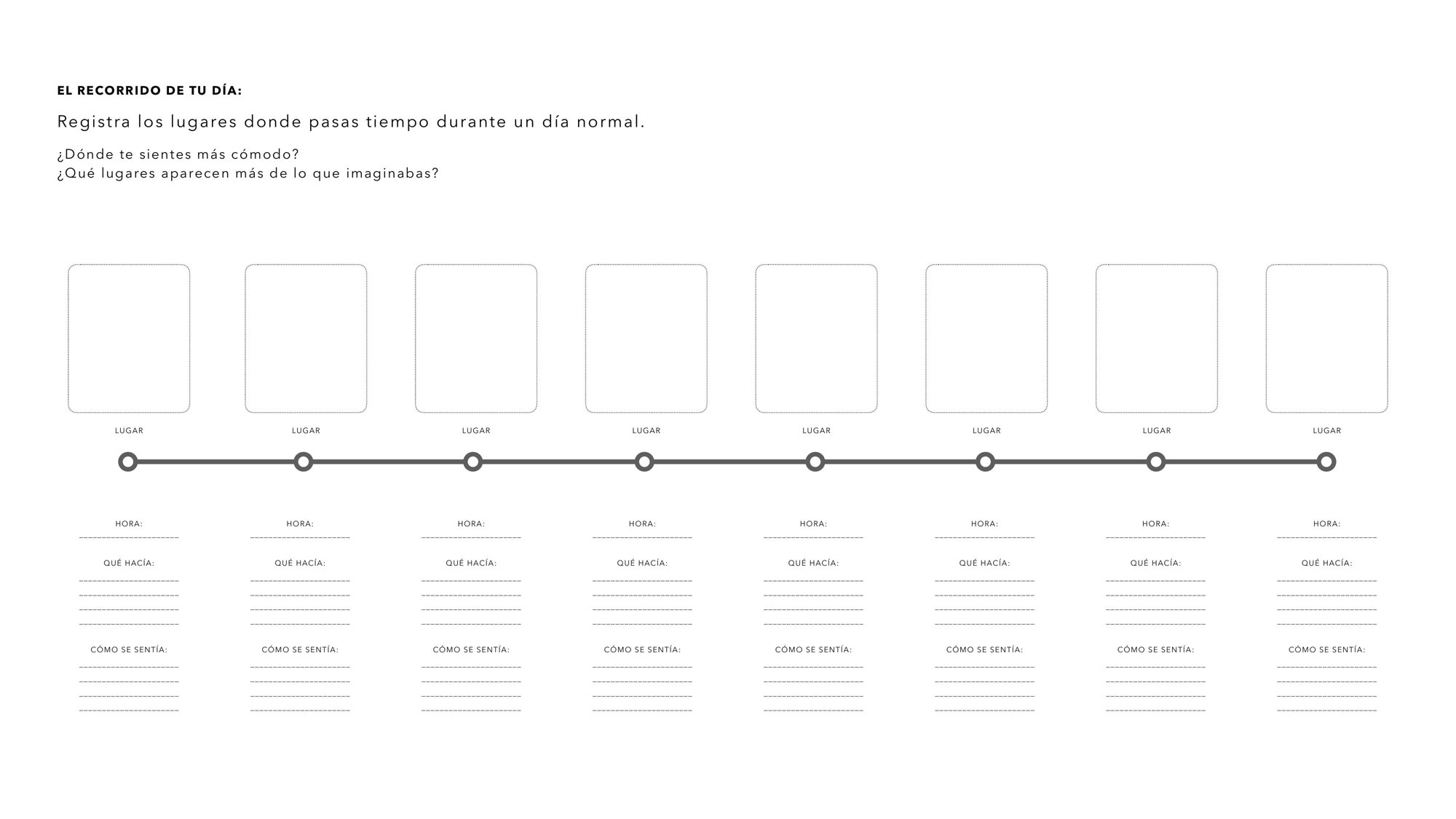
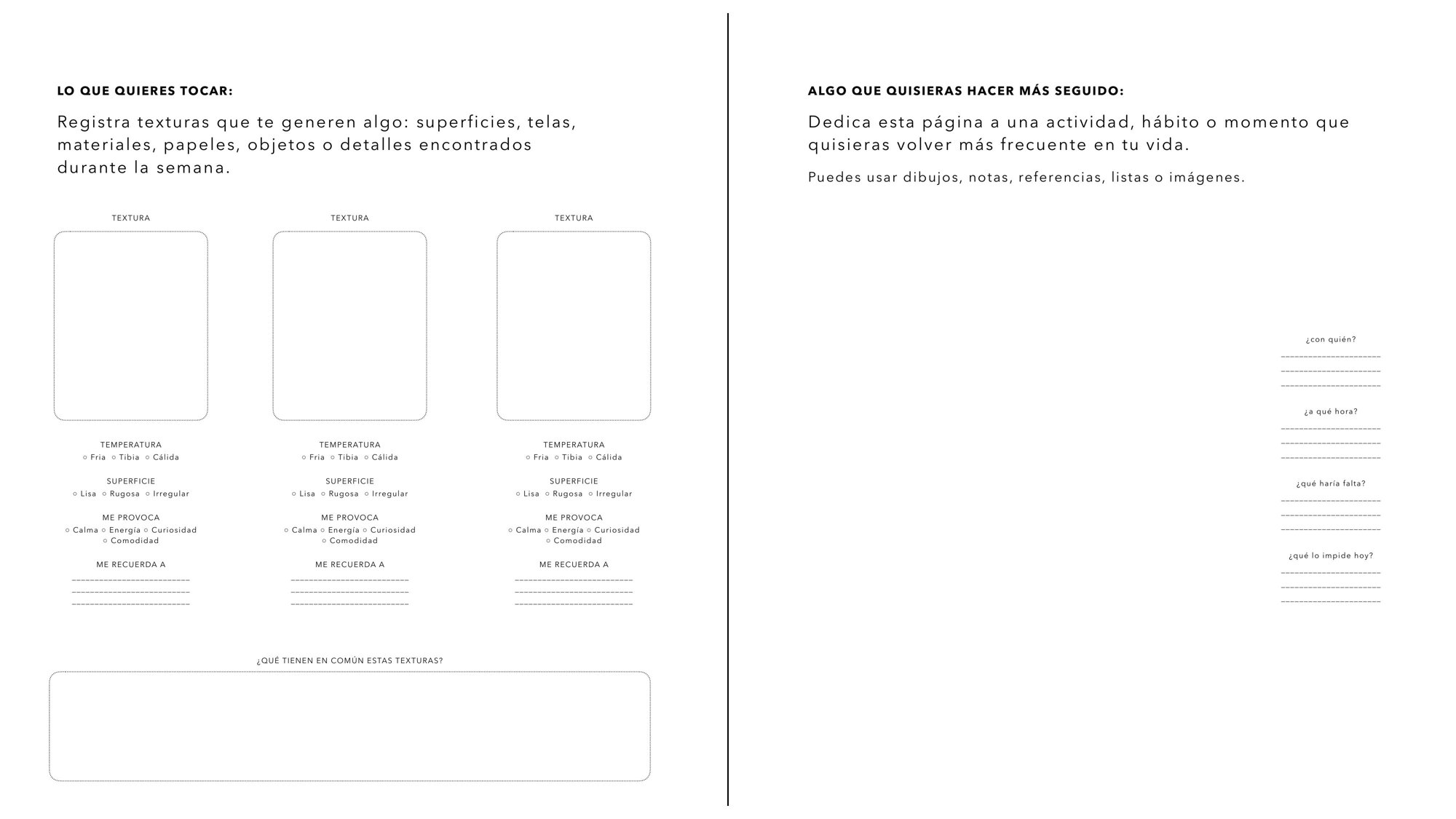
The journal, Bitácora de patrones, goes home with the client. A week of small assignments: draw the chairs you notice, map the route of your day, record the textures you want to touch and the best light in the house. One instruction runs through all of it: don't think about design, think about connection.
Neither piece mentions architecture. Together they produce the best brief an architect could ask for.
03 — How it works
The client plays. The studio listens.
The meeting opens with cards on the table, not a questionnaire. A card asks what an ideal Sunday looks like, or which smells take you home, and the answers turn into stories. The journal keeps the discovery going for a week after the meeting.
Instead of “modern but warm”, the architect hears something else entirely.
“We always end up in the kitchen, even when there's a whole living room.”
04 — Why it matters
A souvenir that works harder than a portfolio.
Most studios hand new clients a brochure. Tejido Urbano hands them something to play and something to write in, and both keep working after the meeting ends.
The journal closes with a line that sums up the project: what you gathered here aren't answers, they're signals. That's the studio's promise made tangible before a single wall is drawn. Design starts from how you live, not from how things look.
Why it matters to us
Because the best brief is the one the client writes themselves.
Tejido Urbano shows that branding doesn't end at the logo. Sometimes the most useful thing a brand can make is a way for people to understand themselves, and a studio that offers that has already designed the most important room: the conversation.
← Back to all work